Environmental Management
Our farmers know healthy land and water is essential for the survival of our farming businesses — and we're supporting them to make better decisions, for this generation and the next.
NITROGEN MANAGEMENT
AIC holds Land Use Consent CRC204999 — the consent that sets the total nitrogen load that may reach the Hurunui and Waiau rivers. Our Nitrogen Management Policy sets out how that load is managed fairly across every scheduled property.
We're committed to helping our shareholders farm productively while protecting the land, rivers and aquifers that make the Amuri Basin such a special place to live and work. Responsible nitrogen management sits at the heart of that responsibility.
We recognise that reliable water and healthy farm systems must go hand in hand with clean waterways — so we manage nitrogen across our scheme in a way that meets our environmental obligations, supports our farmers, and safeguards water quality for the generations who follow.
A fair, farmer-led path to better water quality
Why nitrogen matters
Start with the one-page overview, or read the full policy for complete terms.
Nitrogen is essential to growing pasture and crops, but when more is applied than plants can use, the surplus can leach through the soil into groundwater and rivers. Over time, elevated nitrogen levels affect the health of our waterways and the aquifers our community relies on. Putting the right amount of nutrient in the right place at the right time is one of the most important things we can do to keep the Basin's water clean while keeping our farms viable.
Our approach
We take a catchment-wide view of nitrogen. Rather than treating it as a problem for individual farms to solve in isolation, we work alongside our shareholders to manage nutrient loss across the whole scheme. Every farm in our command area operates under a Farm Environment Plan — practical, farm-specific and reviewed over time, so good management is built into everyday decisions rather than bolted on afterwards.
Nitrogen loads move from increasing to stable.
River load nitrogen is reducing in both rivers.
Continuous improvement in water quality.
How the policy works
Every farm is placed in one of three bands using weighted cattle density (WCD), wintering area and — for high band farms — Overseer nitrogen loss. Move the sliders to match your farm, or select a band to see what it means.
Every property gets an approved Baseline Farm System — Dairy, Dairy Support, Beef, Sheep or Arable — based on how the farm operated over 2019–2025. Agreed and recorded by AIC.
Environmental risk is assessed using weighted cattle density, placing the farm in one of three bands: Low, Medium or High. Your band decides the flexibility you have.
Operate at or below your baseline parameters, meet every Best Management Practice target, and hold an A or B grade FEP audit.
A significant change needs a Farm System Change application — a Farm System Report plus Overseer budget, peer-reviewed by AIC. The Board decides within three months.
The Farm Risk Band Matrix
Find your band
A guide only — your official band is set out in the farm parameter report AIC provides for your property.
and wintering area under 15% of irrigated area*
Land use is flexible up to 1.5 WCD and the wintering area threshold. Proof is required at audit, and a wintering plan must be lodged.
Low band farms may apply for a Farm System Change, provided they hold an A or B FEP audit grade and run at 90%+ irrigation efficiency.
and/or wintering area over 15% of irrigated area*
The farm may apply to change its farm system while showing a 5% reduction from baseline in nitrate loss.
Medium band farms may apply for a Farm System Change with an A or B FEP audit grade, 90%+ irrigation efficiency, and a demonstrated 5% nitrate-loss reduction from baseline.
or Overseer nitrogen loss above 45 kg N/ha
The farm must have a Board-approved five-year Improvement Plan to reduce nitrogen loss to under 45 kg N/ha, delivered within two years of notification of its risk ranking.
High band farms may only apply for a Farm System Change that shows an improvement in the risk of nitrate loss.
*All irrigated area on farm, including independent water.
Monitoring and measurement
We manage nitrogen in line with our resource consent conditions and the wider freshwater expectations set for our area — and we hold ourselves accountable for meeting them.
Our policy lets farmers continue operating under their current farm system without Board approval. Any intensification requires Board sign-off, with the farmer required to demonstrate what mitigations are in place and why the change would improve farm system efficiency. The Board takes a firm approach where farms aren't achieving high grades in FEP audits.
Good management depends on good information. We support the monitoring of nutrient performance across the scheme, and the use of recognised tools to estimate and track nitrogen loss at the farm level.
Meeting our obligation
We manage Farm Environment Plan audits for all shareholders, as well as independent irrigators around the Basin periphery.
A weighted cattle density metric — a proxy for environmental impact — ranks farms into risk bands and will allocate an environmental levy going forward.
Farms in the upper risk band are engaged on improvement plans; farms in the lower band may be permitted to increase intensity depending on their position.
What every farm must do
Maintain an A or B FEP audit grade
Reach 90% irrigation efficiency — or have a plan to get there within three years
Cap inorganic nitrogen fertiliser at 190 kg N/ha/year
Fence waterways and wetlands, with stock excluded
No new drainage to create production land after 1 December 2025
Keep intensive winter grazing within your baseline area, and lodge a wintering plan
Who may apply for a Farm System Change? Farms in the Low or Medium band with an A or B FEP audit, running at 90%+ irrigation efficiency, where the change improves the farm system's efficiency. High band farms may apply where the change shows an improvement in nitrate-loss risk.
Policy Documents
Looking ahead. Responsible nitrogen management is a continuing commitment, not a finished task. As science advances, tools improve and expectations evolve, we'll keep adapting how we work so farming in the Amuri Basin remains both productive and sustainable. We're proud of the progress our farming community has made, and we're committed to doing our part to protect the water that sustains our district for the future.
WATER USE EFFICIENCY
Efficient irrigation is one of the biggest levers we have for reducing losses to water.
Every farm on the scheme must reach 90% irrigation efficiency, or have a plan in place to get there within three years. Since the piping of the scheme, we've been able to monitor water use at farm offtakes — combined with sound irrigation practice, this ensures farms use only the amount of water they require.
Water demand is modelled for each farm and compared to annual water use, so we can give every farmer a score card of how they performed each year.
Efficient, well-scheduled irrigation keeps water and nutrients in the root zone where plants can use them, rather than pushing them past the roots and into groundwater. By helping farmers match water application to soil and crop needs, we reduce both wasted water and the nitrogen losses that come with over-application.
Every drop counted, every season
ENVIRONMENTAL COLLECTIVE
Stronger together, since 2013
The AIC Environmental Collective was established in early 2013. All AIC shareholders and most large independent irrigating farms within the Amuri, Hawarden and Hanmer Springs areas are members. The purpose of the Collective is to assist shareholders, local irrigators, and Low Intensity Dryland Farmers to meet consent conditions or requirements in the Hurunui Waiau River Regional Plan (HWRRP).
The Collective has an Environmental Management Strategy (EMS) which is reviewed and approved by Environment Canterbury. Farmers who are not shareholders can apply to join the Collective to meet their requirements under the HWRRP or their resource consent requirements.
All farms that are part of the Collective must have a Farm Environment Plan (FEP) in place within six months of joining, and their FEPs must be independently audited within three years of joining.

CATCHMENT GROUPS
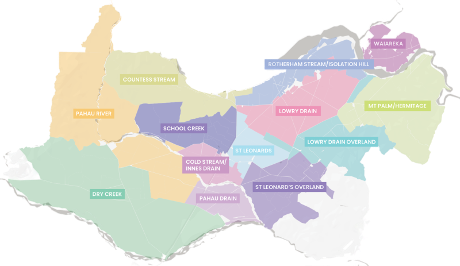
Catchment groups bring together the farmers who share a sub-catchment — the people who know their streams, springs and soils best. Working at this scale means efforts go where water quality needs them most, with priority given to sub-catchments where water quality is poor.
We support the Basin's catchment groups with monitoring data, risk maps and practical guidance, so local action and scheme-wide work pull in the same direction.
Neighbours working on the same water
FARM ENVIRONMENT PLAN
The FEP — every farm's working plan
Farm Environment Plans are the principal tool for delivering the objectives of our Irrigation Scheme Management Plan. Every farm in the Collective has one, independently audited against Good Management Practice.
Applying the right water, at the right time, with well-maintained systems.
Protecting soil structure and minimising loss through cultivation and grazing choices.
Budgeting and applying nutrients to match what the farm actually needs.
Fencing, planting and protecting waterways, native vegetation and riparian margins.
Storing and applying effluent safely, away from waterways and wet soils.
Identifying and managing point-source risks like offal pits, silage and fuel storage.
Audit results are in. Farm Environment Plan audit results for the 24/25 season are now available. Every farm must hold and maintain an A or B audit grade.
RISK MAPS
Sub-catchment risk maps show where losses to water are most likely across the Basin, helping farmers target mitigations where they'll count the most.
Knowing where it matters most
WATER QUALITY MONITORING
Measuring what matters
Data and transparency drive everything we do.
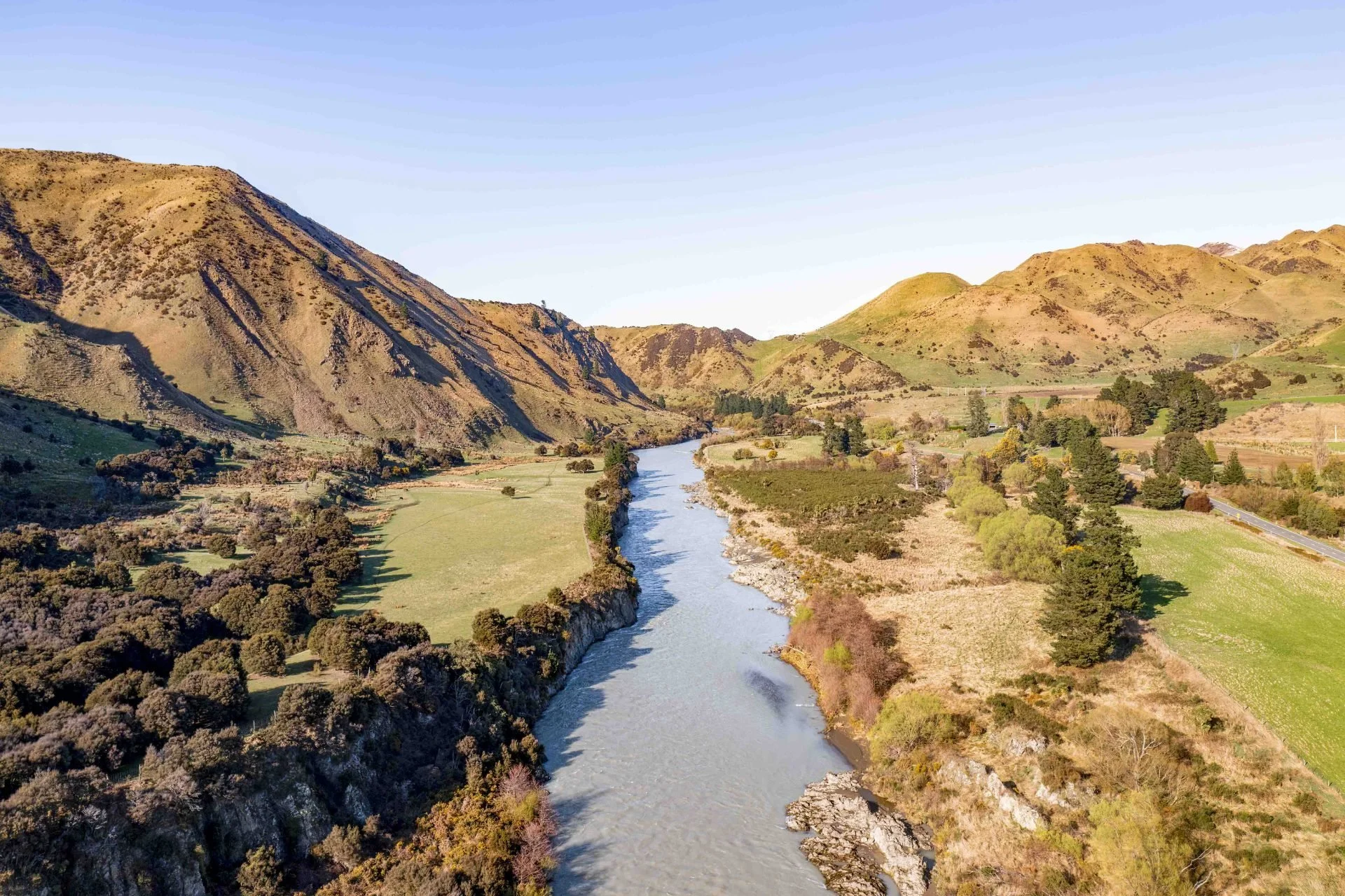
We collect regular groundwater, surface water and waterway samples at 119 sites across the scheme, while also supporting on-farm monitoring. Combined with real-time water usage data, soil moisture sensors and weather stations, this gives us the insight needed to identify where to focus our efforts and support improvements in on-farm water management practices.
WATERWAY MANAGEMENT
Protecting the water that sustains us
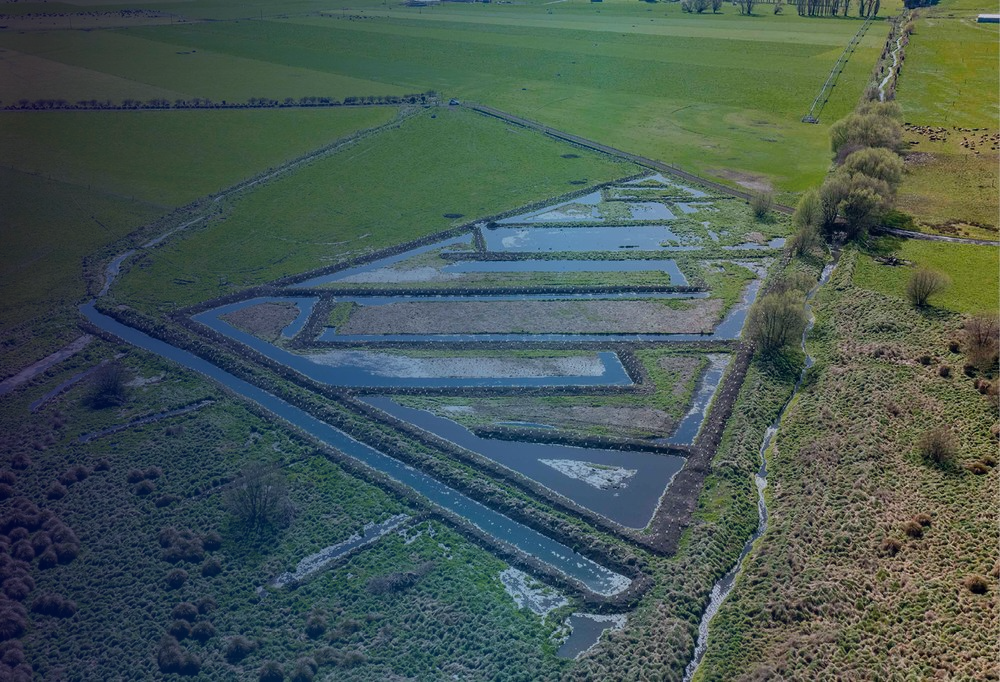
All identified waterways, wetlands and high-attenuation areas across the scheme must be fenced, with stock excluded. Where practical, land is set aside so natural seepage areas can regenerate — these springs and seeps do quiet, valuable work intercepting nutrients before they reach streams.
No new drainage may be installed to create production land after 1 December 2025, and draining any wetland or seepage area counts as a significant farm system change requiring AIC approval.
We monitor nitrate-nitrogen across the Basin's waterways and compare results against the national bottom line for nitrate toxicity — 2.4 mg/L as an annual median, set to protect 95% of species.
ENVIRONMENTAL INITIATIVES
Investing in the Basin's future
We're committed to investing in projects that reduce nutrient losses and improve water quality — from enhancing our understanding of catchment hydrology to putting attenuation to work on the ground.
ENVIRONMENT SUBCOMMITTEE
A delegated, member-approved group that independently manages the FEP audit programme, resolves disputes and compliance issues, and reports outcomes to the AIC Board, Environment Canterbury and the wider community.
Independent oversight, local knowledge
-

Adam Williamson
CHAIR
-

David Croft
MEMBER
-
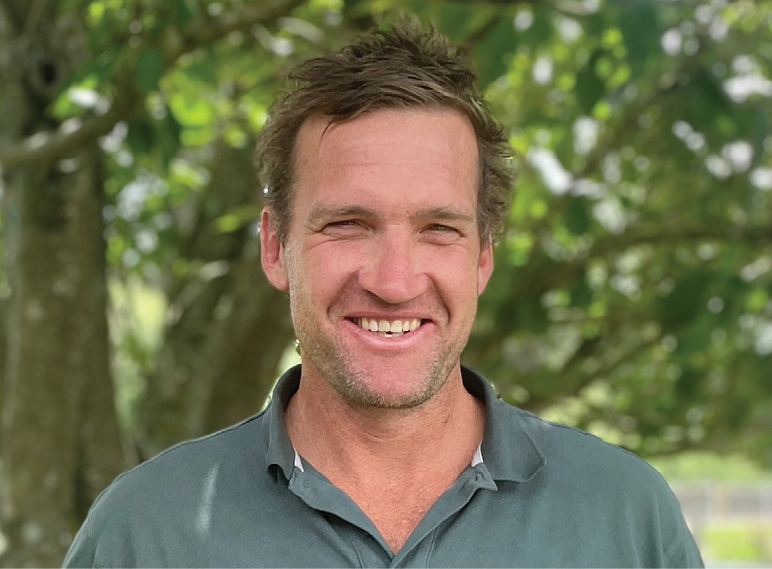
Kevin O'Neill
MEMBER
-

Sam Rutherford
INDEPENDENT - WAUAI
-
Mark Hassall
INDEPENDENT - HURUNUI
Questions about your farm's band, FEP or the Collective?
Talk to the team on 03 315 8984 or email admin@amuriirrigation.co.nz — we're here to help you meet your requirements.